
Newsletter Article

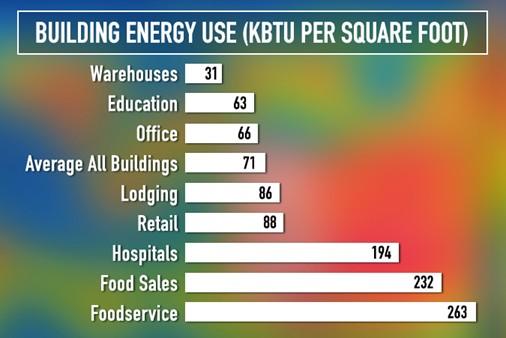
Commercial buildings come in many different types and sizes, but which type uses the most energy? According to data from the U.S. Energy Information Administration (EIA), the three biggest users in terms of energy consumption per square foot are foodservice facilities, grocery stores and hospitals. The following table breaks it down.
Buildings are becoming more energy efficient
Commercial buildings are mostly more energy efficient when you compare the most recent EIA data to the 2012 Commercial Building Energy Consumption Survey, which was released in 2015. In the 2012 survey, the average energy use for all commercial buildings was 80 kBtu per square foot. In the 2018 survey, that number dropped to 71 per kBtu, an 11% reduction.
This progress looks even more impressive when you compare current data to the first building energy survey, conducted in 1979. Then, the average energy use intensity for commercial buildings was 115 kBtu per square foot. That's a reduction in average building energy use by 38% over the last 40 years or so.
Making your building more energy efficient
Is your building part of this trend? If not, maybe it's time you started taking steps to reduce your energy use. It's a great way to save money, improve comfort and demonstrate your organization's commitment to sustainability. While every building is different, here are simple ways to improve the energy efficiency of your facility.
- Check your HVAC. Have your heating and cooling systems cleaned and inspected once a year by a qualified professional.
- Weatherize your building envelope. Make sure your windows and doors are properly sealed. Hire an insulation contractor to ensure that your building is well-insulated according to the minimum recommended levels for your climate zone.
- Take control. Install and implement building system controls to reduce energy use based on occupancy or your operating schedule.
- Stay tuned. Building system controls can waste energy if they aren't tuned properly. Adjust control settings based on changes in weather, operating schedules and so on.
To optimize savings, apply for a free energy assessment through our Commercial Direct Install Program (CDI). After the no obligation assessment, CDI will provide you with a list of targeted recommendations to help you improve energy efficiency and reduce operating costs. Then based on your selections, a CDI program-approved subcontractor can install the measures at no cost to you.
Free online energy resources
Long-term energy savings requires planning. The U.S. Environment Protection Agency's (EPA) Guidelines for Energy Management outlines a multi-step process to help you design and implement a successful energy management plan. Start by using ENERGY STAR Portfolio Manager®, a free online tool that helps you compare your energy use against similar facilities and target energy-saving opportunities.
If your facility is one of those high-energy users, the EPA has also developed energy efficiency guidelines for you:
- ENERGY STAR® Energy Efficiency Opportunities for Your Restaurant
- Supermarkets: An Overview of Energy Efficiency Opportunities
- Healthcare: An Overview of Energy Efficiency Opportunities
Also, visit our Empowering Small Business Website for more industry specific tips and related LADWP rebate and incentive program offerings. By doing your part, you can help ensure that today's buildings continue to become more energy efficient and sustainable.
March 2026 Empowering Small Business
LADWP's monthly Empowering Small Business Newsletter helps inform industry-specific small business customers about LADWP news, conservation programs and ways to save on their bill.
Full Newsletter