
Newsletter Article
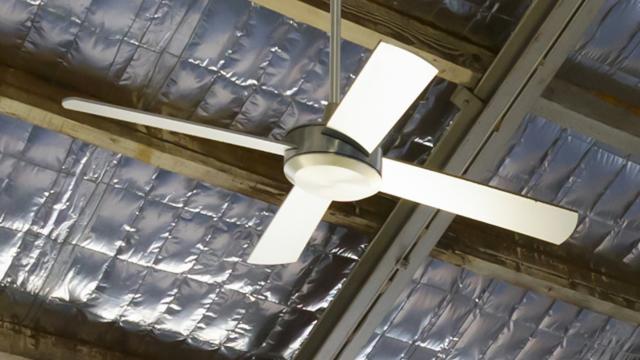
In buildings with high ceilings, such as warehouses, there can be significant temperature differences between the ceiling and the floor, where people are. Temperature extremes and poor humidity control make people feel sluggish and less focused; they become more prone to costly mistakes and on-the-job injuries.
Space conditioning helps, but it has limited effectiveness in many applications. Circulating the air with high-volume ceiling fans improves occupant comfort and saves energy.
Year-round savings and comfort
Air circulation doesn't cool the air; it makes people feel cooler by enhancing evaporation from the skin. Nearly everyone has enjoyed the relief of a cool breeze on a hot, humid day. The air movement created by circulating fans creates that same wind-chill effect, making you feel more comfortable. This can reduce the need for climate control, lowering summer energy bills.
Large ceiling fans are particularly useful in circulating air. In many circumstances, using a ceiling fan allows you to raise building temperatures four degrees with no reduction in comfort. In temperate climates, circulating fans can be a cost-effective replacement for air conditioning.
In winter, warm air rises and eventually leaks out through the roof, while colder air stays close to the floor. This wastes energy by making the heating system work harder. In facilities with high ceilings, there is often a significant temperature variation between the floor and ceiling. In a warehouse with a 30-foot ceiling, a 20°F temperature difference would not be unusual on cold winter days.
Circulating air at the ceiling sends warm air down to the floor, improving temperature distribution and helping to create a more comfortable indoor environment. The increased air circulation also reduces heat loss through the roof, saving energy.
Getting the most from your HVAC system
Proper system maintenance and operating practices, combined with circulating fans, can reduce your energy costs substantially.
Inspect and maintain. Make sure that your HVAC system is inspected each year by a qualified professional. Preventive maintenance practices, such as changing filters and cleaning system components, will help to ensure optimum performance.
Maintain the building envelope. Seal air leaks in walls, the roof, doors and windows. Make sure your facility is insulated to recommended levels. A tight building envelope will reduce energy costs while making your building more comfortable.
By making better use of circulating fans in your facility, you can put a new spin on comfort while making extra space on your energy budget.
July 2025 Empowering Small Business
LADWP's monthly Empowering Small Business Newsletter helps inform industry-specific small business customers about LADWP news, conservation programs and ways to save on their bill.
Full Newsletter